
 North African
Origin
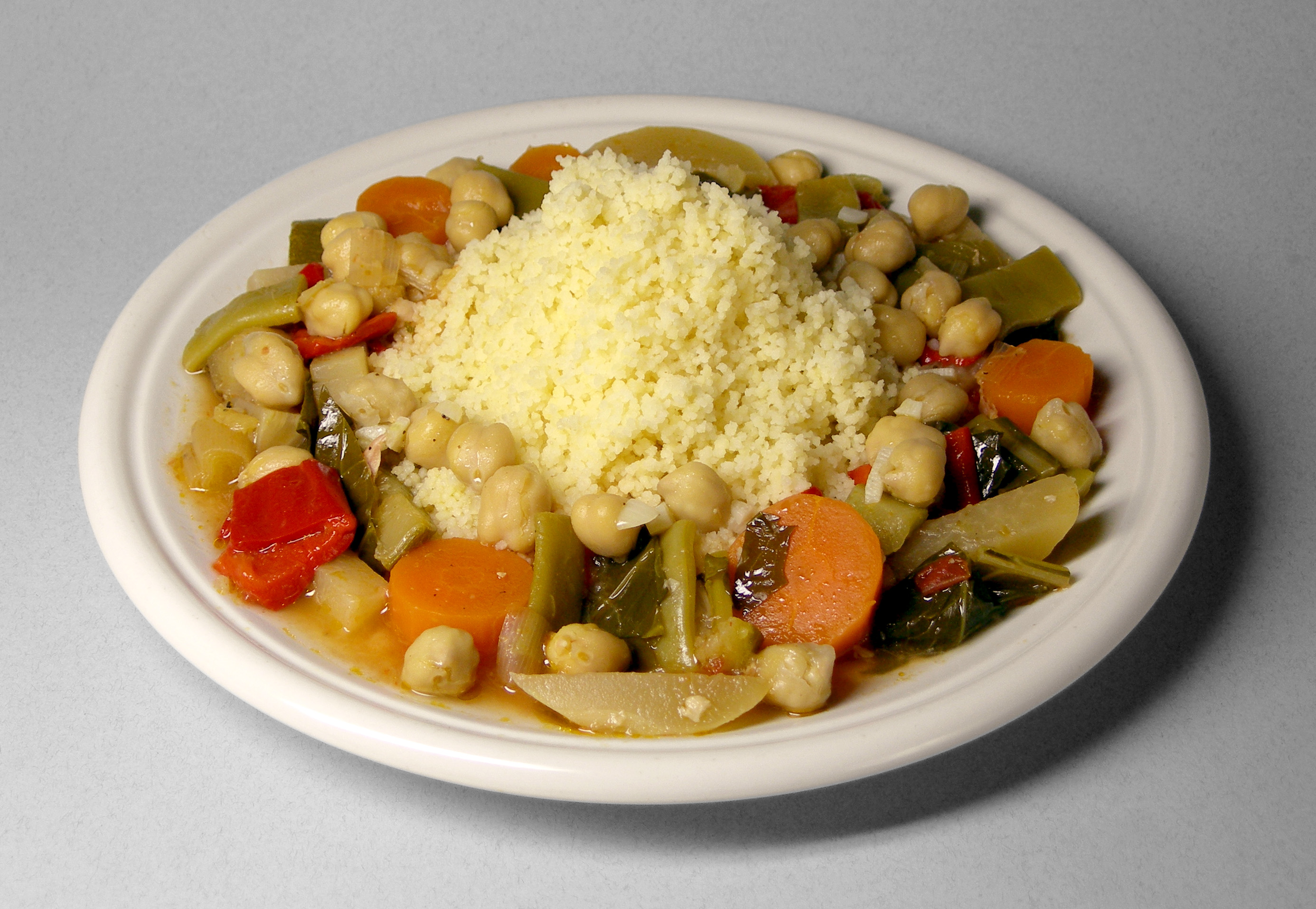
Couscous originated in the Maghreb—Morocco, Algeria, Tunisia, Libya, and Mauritania—as early as the 7th century. The Berber word seksu means “well rolled” or “rounded.” Traditionally hand-rolled by women and valued by nomadic communities for its shelf life, it spread across the Mediterranean and became especially popular in France through North African ties.
How to make them
Traditional couscous is semolina moistened and rolled into tiny pellets, then steamed repeatedly in a couscoussier. Instant couscous is a modern shortcut.
- 01
Sprinkle semolina with salted water and roll between the palms into small granules.
- 02
Sift to separate sizes; re-roll larger pieces.
- 03
Steam in a couscoussier over simmering stew or water.
- 04
Fluff with a fork, drizzle lightly with water or oil, and steam again.
- 05
Repeat steaming 2–3 times until tender and separate.
- 06
For instant couscous: pour boiling liquid (1:1), cover 5 minutes, then fluff with butter.
Storage
Dry couscous keeps up to 2 years airtight in a cool, dry place. Cooked couscous refrigerates 3–4 days or freezes up to 3 months. Reheat with a splash of water or broth, then fluff.
Popular dishes
- Couscous Royale
Festive platter with lamb, chicken, merguez, vegetables, and broth.
- Couscous Tfaya
Sweet-savory topping of caramelized onions, raisins, and chickpeas.
- Tunisian Couscous
Spicier broth with harissa, fish or lamb, and vegetables.
- Couscous Salad
Cold grains with herbs, lemon, olive oil, and chopped vegetables.
- Israeli Couscous (Ptitim)
Larger toasted pearls cooked pilaf-style with vegetables and spices.
From this noodle
Related recipes
North African North African
Couscous Salad
Cold grains with herbs, lemon, olive oil, and chopped vegetables.
30 mineasynorth-africansemolina
 North African
Couscous Tfaya
Sweet-savory topping of caramelized onions, raisins, and chickpeas.
1 hr 30 minmediumnorth-africansemolina
 North African
Israeli Couscous (Ptitim)
Larger toasted pearls cooked pilaf-style with vegetables and spices.
30 minmediumnorth-africansemolina
 North African
Tunisian Couscous
Spicier broth with harissa, fish or lamb, and vegetables.
1 hr 30 minmediumnorth-africansemolina