 Japanese
Kake Soba
Hot soba in dashi broth with green onions.
35 mineasyjapanesebuckwheat

Asian guide
Nutty Japanese buckwheat noodles served hot in dashi or chilled with a dipping sauce—earthy, elegant, and quick-cooking.
Soba entered Japanese cuisine during the Edo period (1603–1868), when buckwheat thrived in mountainous regions where rice struggled. It became popular across social classes and was sold by street vendors—an early form of fast food. Nagano remains famous for high-quality soba, and pure buckwheat (juwari) noodles are especially prized.
Traditional soba is made from buckwheat flour, often blended with wheat flour for easier handling and binding.
Mix buckwheat flour (and wheat if using) with water into a stiff dough.
Knead carefully—buckwheat has little gluten and can crack.
Roll into a thin, even sheet.
Fold and cut into fine noodles about 1–2 mm thick.
Boil briefly, 30–60 seconds, until just cooked.
Rinse thoroughly in cold water to remove starch and set the texture.
Fresh soba should be eaten within a day or two and kept refrigerated. Dried soba keeps up to a year in a cool, dry place. Cooked soba is best after a cold rinse; refrigerate no more than a day and rinse again before serving.
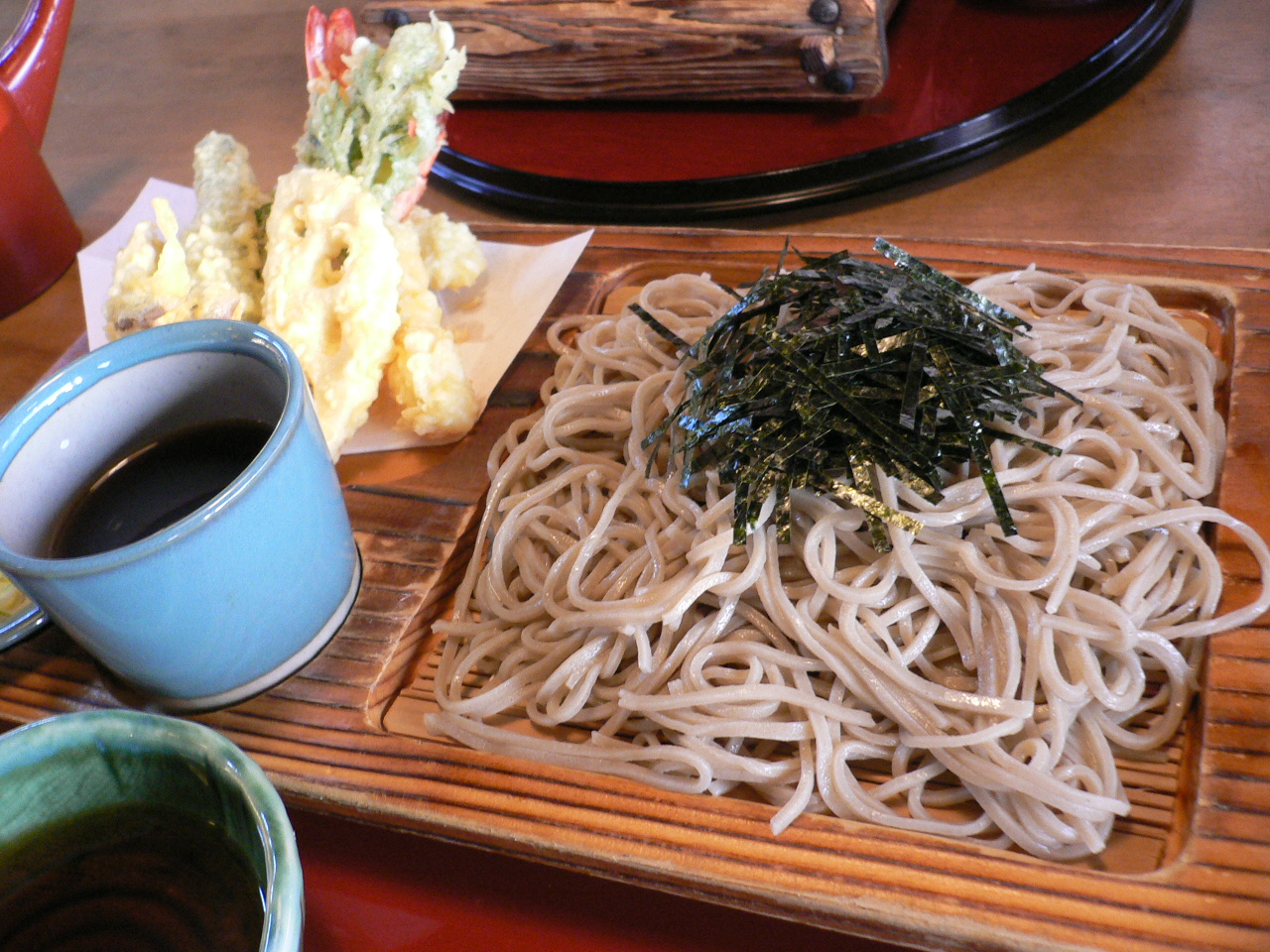
Chilled soba on a bamboo mat with tsuyu dipping sauce and condiments.
Hot soba in dashi broth with green onions.
Hot soba topped with crisp tempura.
Soba topped with sweet simmered fried tofu (aburaage).
Soba crowned with grated mountain yam for a silky, prized texture.
From this noodle
JapaneseHot soba in dashi broth with green onions.
 Japanese
Soba topped with sweet simmered fried tofu (aburaage).
 Japanese
Hot soba topped with crisp tempura.
 Japanese
Soba crowned with grated mountain yam for a silky, prized texture.
 Japanese
Chilled soba on a bamboo mat with tsuyu dipping sauce and condiments.