 Other
OtherChow Fun
Cantonese wok-fried wide rice noodles with beef and bean sprouts.
35 minmediumgluten-freerice

Asian guide
Naturally gluten-free noodles from rice flour—ranging from thread-thin vermicelli to wide sheets used across Southeast Asia.
Rice noodles originated in southern China over 2,000 years ago and spread throughout Southeast Asia wherever rice was the staple crop. Vietnam, Thailand, Malaysia, and the Philippines each developed signature widths and textures—from pho’s flat bánh phở to pad Thai’s medium ribbons and delicate vermicelli for salads and rolls.
Rice noodles are made primarily from rice flour and water, sometimes with tapioca or cornstarch for elasticity.
Mix rice flour with water into a smooth, pourable batter.
Optional: add tapioca or cornstarch for stretch and chew.
Pour a thin layer onto a tray or cloth.
Steam until the batter sets into a translucent sheet.
Cool slightly, then cut into vermicelli, medium, or wide noodles.
Fresh noodles often need only a hot-water soak; dried ones soak or briefly boil.
Dried rice noodles keep up to a year in a cool, dry place. Fresh rice noodles should be used within a day or two, refrigerated airtight; briefly steam if they firm up. Cooked rice noodles are best eaten soon—they turn sticky and fragile when stored.
Vietnamese aromatic beef or chicken soup with flat rice noodles and herbs.
Thai stir-fried noodles with tamarind, egg, tofu or shrimp, and peanuts.
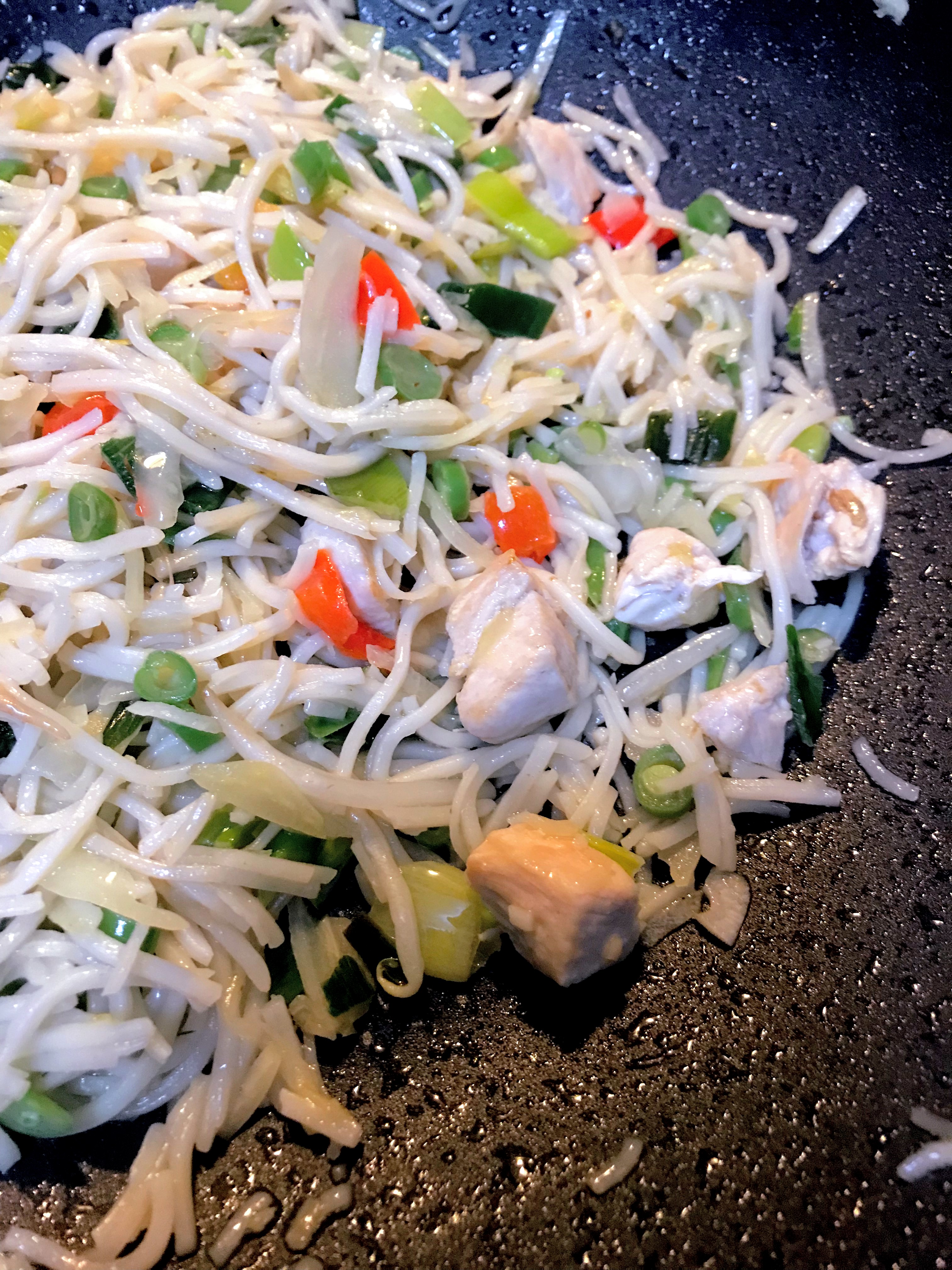
Cantonese wok-fried wide rice noodles with beef and bean sprouts.
Curry-spiced vermicelli stir-fry with vegetables and protein.
Rice paper rolls filled with vermicelli, herbs, and shrimp or tofu.
From this noodle
OtherCantonese wok-fried wide rice noodles with beef and bean sprouts.
 Other
OtherRice paper rolls filled with vermicelli, herbs, and shrimp or tofu.
 Thai
Thai Vietnamese
 Other
OtherCurry-spiced vermicelli stir-fry with vegetables and protein.