 Chinese
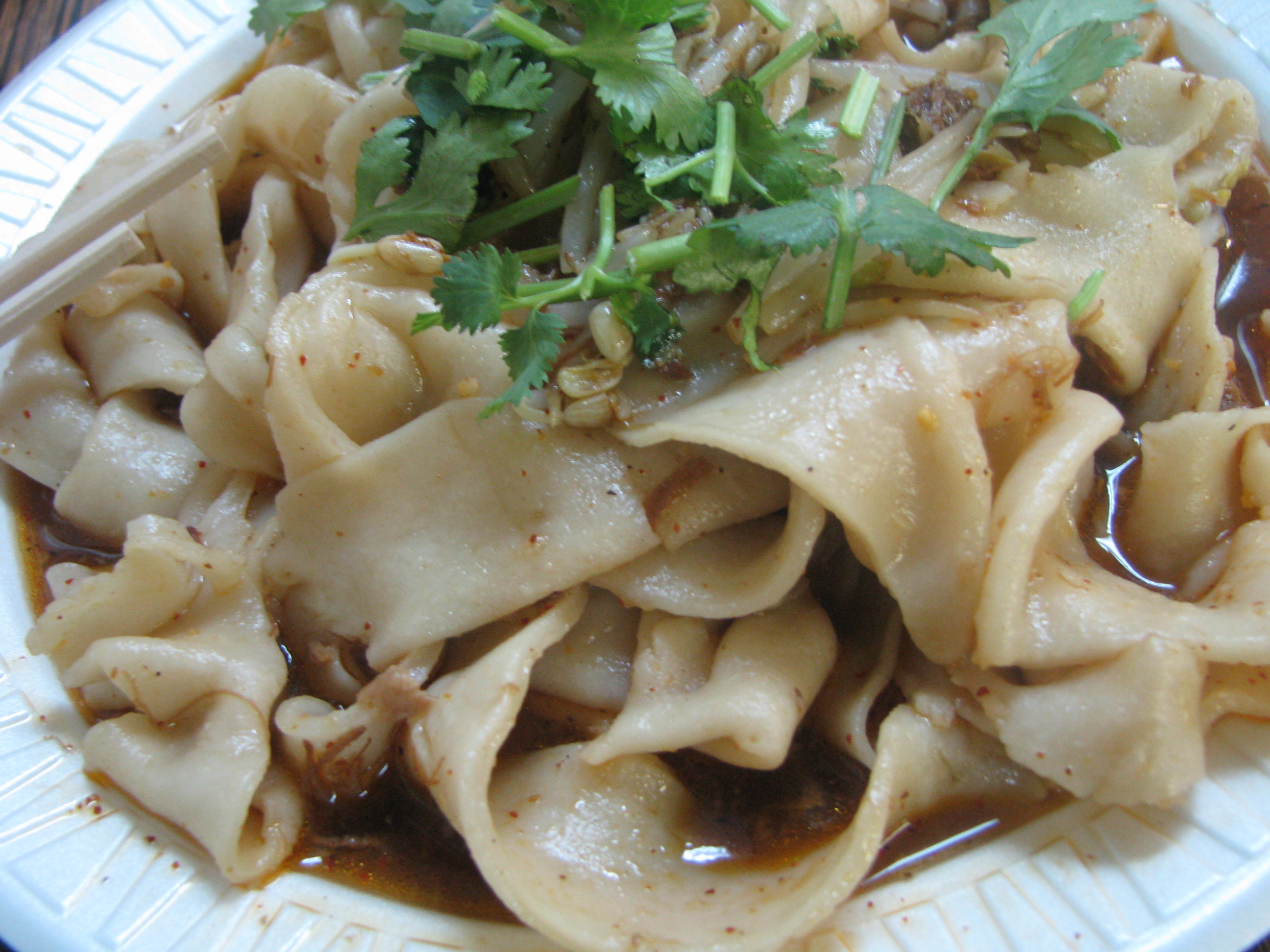
Biang Biang with Braised Pork
Wide belts under savory red-braised pork and greens.
30 minmediumchinesewheat
Asian guide
Shaanxi’s famously wide, belt-like hand-ripped noodles—chewy ribbons that carry chili oil, garlic, and vinegar with every slap of the dough.
Biang biang noodles come from Shaanxi province in northwest China. The name evokes the sound of dough slapped against the counter. Extra-wide belts are torn by hand and typically dressed with a sizzling oil poured over garlic, chili, and scallions.
Make a stiff wheat dough and rest it until relaxed and stretchy.
Roll into thick strips, then pull and slap into long, wide belts.
Boil until chewy-tender and drain.
Top with garlic, chili flakes, and vinegar; pour smoking-hot oil over to bloom aromatics.
Dough keeps refrigerated up to a day. Cooked noodles are best eaten immediately; leftovers can be refreshed briefly in boiling water.
The signature bowl: chili, garlic, and vinegar awakened with hot oil.
Wide belts under savory red-braised pork and greens.
Tangy tomato sauce clinging to thick handmade ribbons.
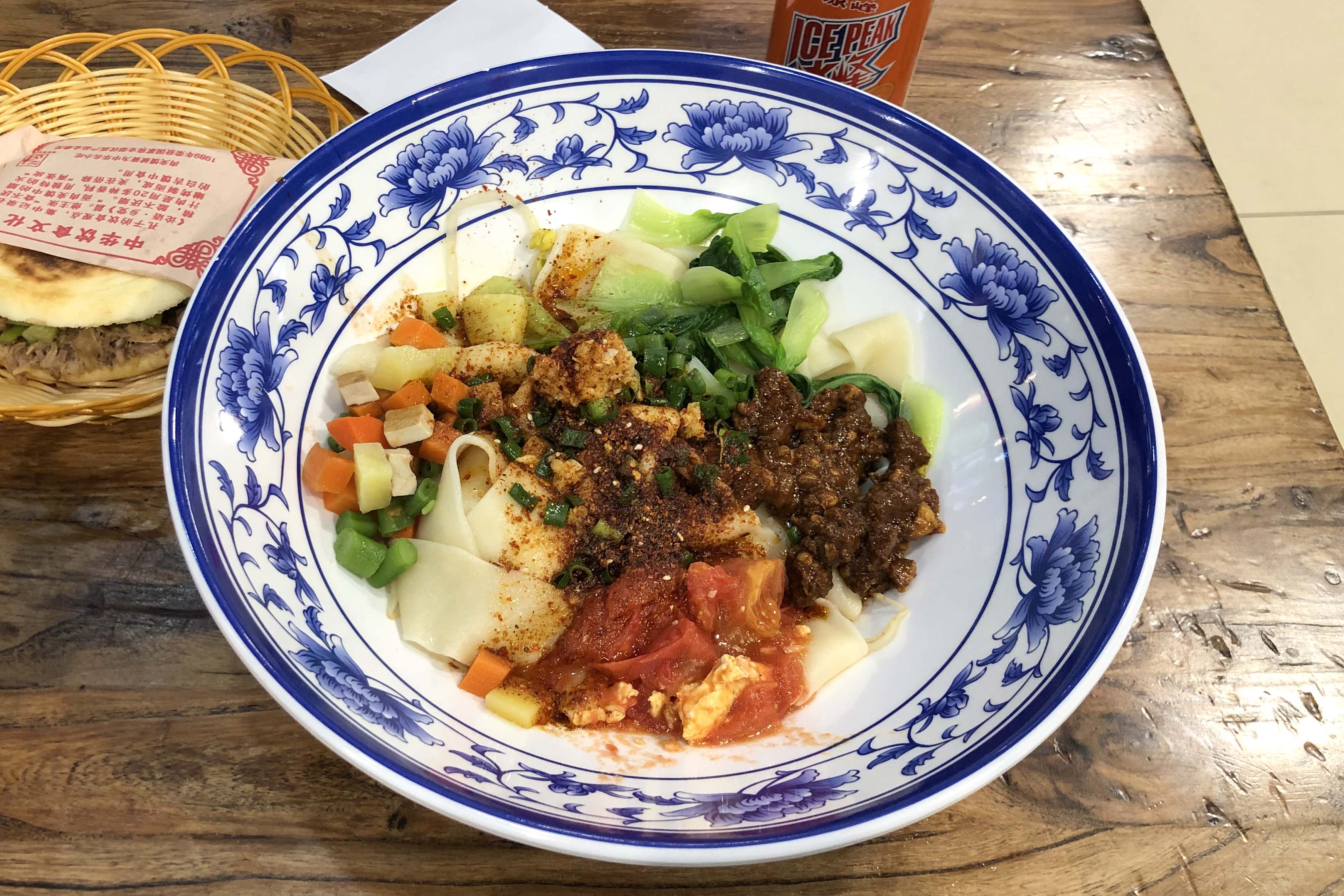
Shaanxi minced-meat sauce served over wide noodles.
Plenty of bok choy or spinach with the classic chili-oil dressing.
From this noodle
ChineseWide belts under savory red-braised pork and greens.
 Chinese
The signature bowl: chili, garlic, and vinegar awakened with hot oil.
 Chinese
Shaanxi minced-meat sauce served over wide noodles.
 Chinese
Tangy tomato sauce clinging to thick handmade ribbons.
 Chinese
Plenty of bok choy or spinach with the classic chili-oil dressing.